What Do You Call a Person With Many Talents?
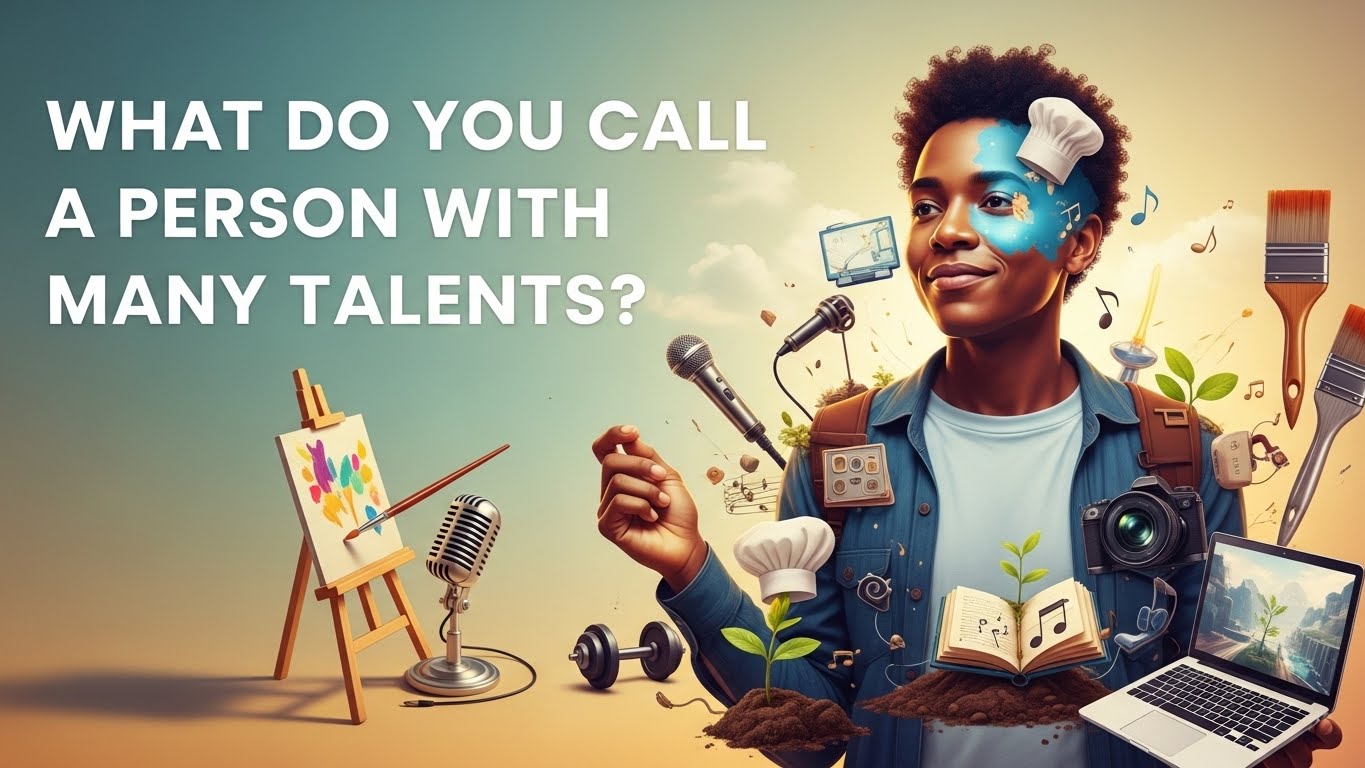
Have you ever met someone who seems to excel at everything they try? They might be a brilliant programmer who also paints stunning landscapes, writes poetry, and plays the guitar. We often marvel at such individuals, wondering how one person can possess so many skills. The English language, rich and varied, offers a host of terms to describe a person with many talents, each with its own unique history and connotation.
This article will explore the different names we use for these versatile individuals, from historical terms to modern-day descriptions. We will look at the origins of these words, celebrate famous examples, and examine the unique advantages and difficulties that come with being a multi-skilled person. Understanding these terms helps us appreciate the diverse ways human potential can be expressed.
The Spectrum of Talent: From Polymath to Jack of All Trades

Describing a multi-talented person isn’t a one-size-fits-all situation. The term you choose often depends on the depth and breadth of their skills. Let’s break down the most common labels and what they truly mean.
Polymath: The Master of Many Fields
The term polymath comes from the Greek words poly (many) and manthanein (to learn). A polymath is not just skilled in several areas; they have achieved a significant level of expertise in multiple, often unrelated, disciplines. This term implies a deep, scholarly knowledge and a mastery that goes far beyond hobbyist levels.
Historically, polymaths were more common when the boundaries between different fields of knowledge were less rigid. Think of the great thinkers of the ancient world or the Renaissance, who could be philosophers, mathematicians, artists, and scientists all at once. A true polymath is a talented individual whose contributions are recognized across various domains.
Renaissance Person: A Modern Polymath

Closely related to the polymath is the Renaissance person. This term is a direct nod to the European Renaissance (14th to 17th centuries), an era that celebrated the well-rounded individual. The ideal “Renaissance man” was expected to be knowledgeable in the arts, sciences, and humanities, as well as proficient in physical pursuits.
Today, we use “Renaissance person” to describe someone with broad interests and accomplishments in several fields. It carries the same weight as “polymath” but with a more cultural and artistic flavor. A Renaissance person embodies the spirit of intellectual curiosity and creative expression that defined that historical period.
Jack of All Trades, Master of None?
The phrase “jack of all trades” is perhaps one of the most well-known and often misunderstood terms for a multi-skilled person. It describes someone who has a competent ability in many different skills but is not necessarily an expert in any single one.
The full, original expression was “A jack of all trades is a master of none, but oftentimes better than a master of one.” Over time, the second half of this phrase was dropped, giving the term a slightly negative connotation. It can sometimes imply a lack of focus or depth. However, in many contexts, being a jack of all trades is incredibly valuable. These versatile individuals are excellent problem-solvers, adaptable, and can see connections between different fields that specialists might miss.
Other Terms for a Versatile Individual
Beyond these primary labels, several other words and phrases capture the essence of a multi-talented person:
- Multipotentialite: A more modern term, popularized by career coach Emilie Wapnick. It describes someone with many interests and creative pursuits, who may not want to choose just one path.
- Generalist: This term contrasts with a specialist. A generalist has a broad base of knowledge and skills, making them adaptable and able to work in various roles.
- Versatile Individual: A straightforward and positive description for someone who can adapt to many different functions or activities successfully.
- Multi-skilled professional: This is a common term in the modern workplace, referring to an employee who brings a diverse skill set to their role, making them a valuable asset to any team.
Famous Multi-Talented People Throughout History

History is filled with inspiring examples of individuals who refused to be confined to a single box. Their stories show us the incredible heights a talented individual can reach.
Leonardo da Vinci: The Ultimate Renaissance Man
When you think of a polymath, Leonardo da Vinci is often the first name that comes to mind. He was a painter, sculptor, architect, musician, scientist, inventor, anatomist, geologist, cartographer, and botanist. His masterpieces like the Mona Lisa and The Last Supper would have secured his place in history alone. However, his notebooks reveal a mind teeming with inventions and scientific observations that were centuries ahead of their time, including designs for a flying machine and a diving suit.
Benjamin Franklin: The American Polymath
A key figure in American history, Benjamin Franklin was a true polymath. He was one of the Founding Fathers, a leading author, printer, political theorist, postmaster, scientist, inventor, and diplomat. His scientific pursuits led to important discoveries about electricity. As an inventor, he gave us the lightning rod, bifocals, and the Franklin stove. His intellectual curiosity knew no bounds, making him a perfect example of a multi-talented person who shaped a nation.
Maya Angelou: A Voice of Many Talents
In the 20th century, Maya Angelou demonstrated that being a multi-talented person transcends science and art. She was a celebrated poet and author, best known for her autobiography I Know Why the Caged Bird Sings. Beyond her literary genius, she was also an actress, screenwriter, dancer, and civil rights activist. Her ability to master so many forms of expression gave her a powerful and unique voice that continues to inspire millions.
The Benefits of Being a Multi-Talented Person
Having a diverse range of skills offers significant advantages, both personally and professionally. A versatile individual often possesses a unique toolkit for navigating life and work.
Enhanced Creativity and Innovation
One of the greatest benefits of being multi-talented is the ability to connect disparate ideas. This cross-pollination of knowledge often leads to groundbreaking insights and creative solutions. A programmer with a background in music might approach coding with a unique sense of rhythm and structure. An engineer who also studies biology can draw inspiration from nature to design more efficient systems. This ability to think outside of traditional silos is a powerful engine for innovation.
Greater Adaptability and Resilience
The world is constantly changing, and the job market is no exception. A multi-skilled professional is better equipped to adapt to new challenges and pivot their career when necessary. If one industry declines, they have other skills to fall back on. This adaptability provides a sense of security and resilience that specialists may not have. A jack of all trades can wear many hats, making them invaluable in startups, small businesses, and dynamic environments.
A Richer, More Fulfilling Life
For a multi-talented person, learning is a lifelong passion. Pursuing various interests keeps life exciting and engaging. It opens up opportunities to connect with different communities and see the world through multiple lenses. This constant growth and exploration can lead to a deep sense of personal fulfillment that isn’t tied to a single identity or profession.
The Challenges of Being a Multi-Skilled Individual

Despite the many benefits, being a person with many talents is not without its difficulties. Navigating a world that often prizes specialization can be a challenge.
The Pressure to Specialize
From a young age, we are often asked, “What do you want to be when you grow up?” The expectation is to choose one path and stick to it. A multi-talented person can feel immense pressure to pick a single focus, which can feel limiting and unnatural. This societal pressure can lead to feelings of confusion and self-doubt.
The “Master of None” Dilemma
The dark side of the “jack of all trades” label is the fear of never achieving true mastery in any one area. A versatile individual might worry that by spreading their energy across multiple pursuits, they are sacrificing the depth required to become a true expert. This can lead to “impostor syndrome,” where they feel like a fraud despite their many competencies. It requires confidence to embrace a path of breadth over depth.
Analysis Paralysis and Lack of Focus
When you are interested in everything, choosing what to work on can be overwhelming. This “analysis paralysis” can prevent a multi-talented person from making progress in any of their chosen fields. They may start many projects but struggle to finish them, jumping from one exciting new idea to the next. Developing discipline and focus is a key challenge for many multipotentialites.
Embrace Your Inner Polymath
Whether you call them a polymath, a Renaissance person, or a jack of all trades, a person with many talents brings a unique and valuable perspective to the world. Their ability to bridge different disciplines, adapt to change, and innovate makes them essential in our complex, interconnected society.
If you are a multi-skilled individual, it’s important to recognize that your diverse interests are a strength, not a weakness. Learn to manage the challenges by setting clear priorities and celebrating your progress across all your passions. The world needs specialists, but it also desperately needs versatile individuals who can see the big picture and connect the dots. Embrace your curiosity, continue learning, and never be afraid to be more than one thing.