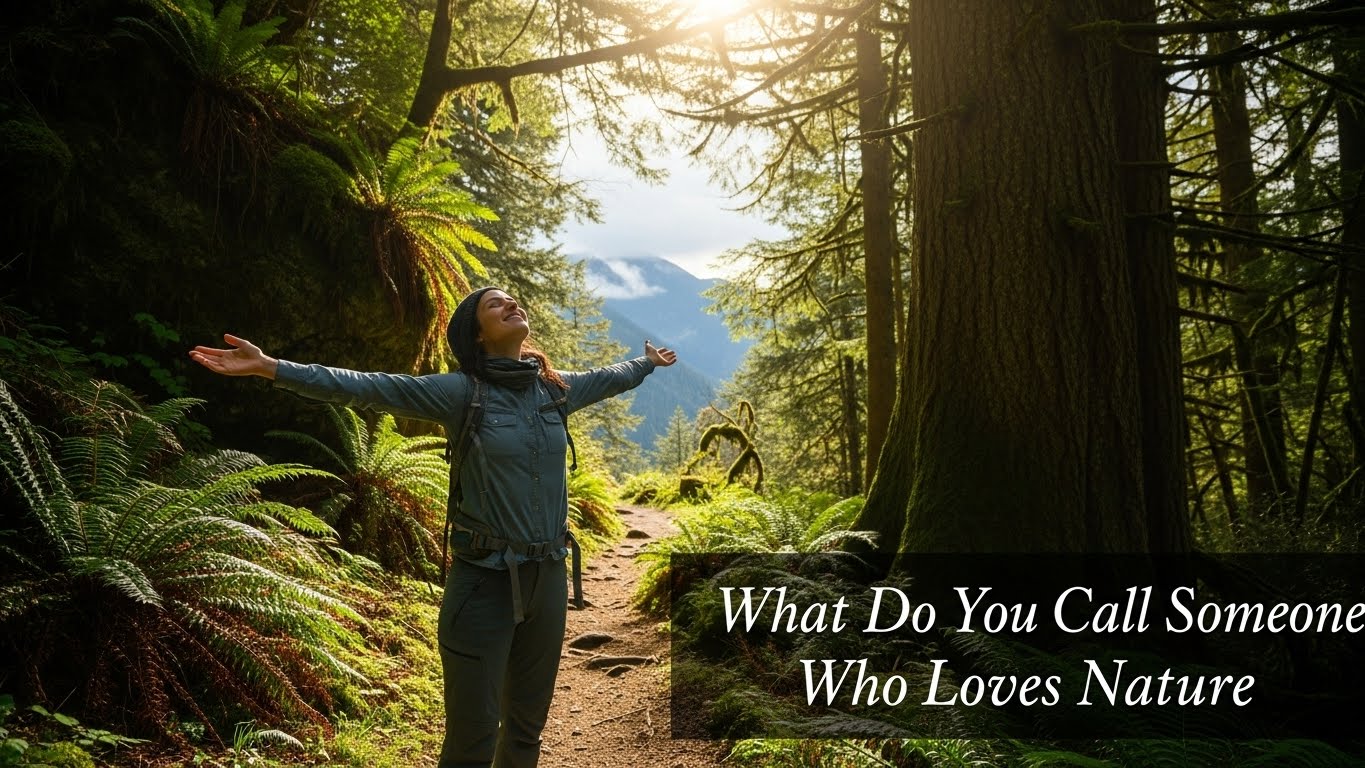
What Do You Call Someone Who Loves Nature?
Some people feel an undeniable pull toward the great outdoors. They find peace in the rustling of leaves, joy in the sight of a mountain peak, and a deep sense of connection to the living world. This profound affection for the natural environment is a universal human experience, but what do we call someone who embodies this passion? While “nature lover” is a common and fitting description, a rich vocabulary exists to describe the many ways people connect with the planet.
This article explores the different terms we use for those who have a strong love for nature. We will look at the distinctions between titles like naturalist, environmentalist, and ecophile. We will also examine the common traits and motivations that define a nature enthusiast and how this passion often translates into an eco-friendly lifestyle and a dedication to environmental conservation.
The Spectrum of a Nature Enthusiast

The term “nature lover” serves as a wonderful umbrella, but under it lie many specific shades of passion and engagement. A person’s relationship with the natural world can range from casual appreciation to a dedicated scientific or activist pursuit. The name we use often reflects the depth and focus of their connection.
Common Terms for a Love of Nature
Here are some of the most frequently used words and phrases to describe someone who appreciates the outdoors:
- Nature Lover: A broad and accessible term for anyone who enjoys being in natural settings. This person finds joy and rejuvenation in the outdoors, whether through gardening, hiking, or simply watching a sunset.
- Outdoorsman/Outdoorswoman: This term often implies a more rugged, active engagement with nature. It brings to mind activities like camping, fishing, hunting, and backcountry trekking.
- Nature Enthusiast: Similar to a nature lover, but with a connotation of more active interest and excitement. An enthusiast actively seeks out opportunities to engage with the natural world.
- Green Soul: A more poetic and informal term for someone whose spirit seems intrinsically linked to the environment.
These labels are excellent for everyday conversation, but other terms offer more specific meanings related to knowledge, action, and philosophy.
Beyond the Basics: Naturalist, Environmentalist, and More
For some, a love for nature goes beyond simple appreciation and becomes a core part of their identity, studies, or life’s work. In these cases, more precise terms are often more appropriate.
The Naturalist: A Student of the Wild
A naturalist is someone who studies natural history. They possess a deep curiosity about the organisms and ecosystems around them. This isn’t just a casual interest; it’s a practice of observation, identification, and understanding.
Characteristics of a naturalist include:
- Observational Skills: They pay close attention to details—the type of bird building a nest, the species of a wildflower, or the tracks an animal left behind.
- Desire for Knowledge: Naturalists are often lifelong learners. They might own field guides, take courses, or join local clubs to deepen their understanding of flora and fauna.
- Documentation: Many naturalists keep journals, sketch what they see, or take photographs to record their findings.
Historically, figures like Charles Darwin and Henry David Thoreau were quintessential naturalists. Today, anyone with a passion for learning about the living world can be a naturalist, whether they are an amateur botanist, a devoted birdwatcher, or a professional biologist.
The Environmentalist: A Protector of the Planet

An environmentalist is someone who is concerned with and advocates for the protection of the environment. While a naturalist studies nature, an environmentalist works to save it. Their love for nature fuels a commitment to action.
The focus of an environmentalist is on environmental conservation and addressing threats like pollution, climate change, and habitat loss. This advocacy can take many forms:
- Activism: Participating in protests, signing petitions, and campaigning for green policies.
- Lifestyle Choices: Adopting an eco-friendly lifestyle by reducing waste, conserving energy, and making sustainable consumer choices.
- Education: Spreading awareness about environmental issues and encouraging others to take action.
A person can be both a naturalist and an environmentalist. In fact, a deep understanding of natural systems often inspires a powerful desire to protect them. Rachel Carson, author of “Silent Spring,” used her knowledge as a marine biologist to spark the modern environmental movement.
The Ecophile: One Who Loves Their Home
The term ecophile comes from the Greek words “oikos” (house) and “philia” (love). It literally means “lover of the house,” where “house” refers to our environment or ecosystem. An ecophile is someone who feels a deep, almost spiritual connection to the earth and its ecological systems.
While similar to an environmentalist, the term ecophile often emphasizes the philosophical and emotional bond with nature. It’s less about the political “-ism” and more about the intrinsic love and respect for the planet as our home. An ecophile’s actions are driven by a sense of stewardship and a belief that human well-being is inseparable from the health of the environment.
The Shared Traits of a Nature Lover
Regardless of the specific label, people who love nature tend to share a set of common characteristics and behaviors. Their passion is not just a passing hobby but something that shapes their perspective and daily life.
- A Sense of Wonder: They maintain a childlike curiosity and awe for the natural world. A simple spiderweb or the changing colors of the leaves can be a source of fascination.
- Preference for Outdoor Activities: Given the choice, they would rather spend their free time outside. Their weekends are often filled with outdoor activities like hiking, kayaking, gardening, or simply relaxing in a park.
- Increased Mindfulness and Presence: Nature has a way of pulling you into the present moment. Nature enthusiasts often practice mindfulness without even realizing it, as they focus on the sounds, smells, and sights around them.
- Deep-Seated Empathy: This love often extends to all living things, fostering a sense of empathy for animals and a respect for the delicate balance of ecosystems.
- A Commitment to an Eco-Friendly Lifestyle: Many nature lovers feel a personal responsibility to minimize their impact on the planet. This can manifest in various ways, such as recycling, composting, reducing consumption, and supporting sustainable brands.
The Psychology Behind a Love for Nature

Why do humans have this innate connection to the natural world? The “biophilia hypothesis,” popularized by biologist E.O. Wilson, suggests that this bond is rooted in our evolutionary history. For hundreds of thousands of years, our survival depended on a deep connection to nature—understanding its rhythms, finding its resources, and respecting its dangers.
This theory proposes that our affinity for nature is hardwired into our DNA. It explains why spending time in natural environments has been shown to have measurable benefits for our well-being.
Studies have consistently demonstrated that exposure to nature can:
- Reduce stress and anxiety levels.
- Lower blood pressure and heart rate.
- Improve mood and cognitive function.
- Increase feelings of happiness and life satisfaction.
For a nature enthusiast, these benefits are not just abstract scientific findings; they are a lived reality. The peace they feel in a forest or by the ocean is a powerful, restorative force that they actively seek out.
How to Cultivate Your Inner Nature Lover
If you feel a pull toward the natural world but are not sure where to start, cultivating this connection is a rewarding journey. You do not need to become an expert naturalist or a full-time activist overnight. It starts with small, intentional steps.
1. Start with Simple Observation
You don’t need to travel to a national park to connect with nature. It is all around you.
- Pay Attention: Take a few minutes each day to notice the natural world in your immediate surroundings. Look at the sky, listen for birdsong, or observe the insects in a patch of grass.
- Visit Local Parks: Explore the green spaces in your community. A local park can be a gateway to discovering the flora and fauna of your region.
2. Engage in Outdoor Activities
Find an activity that brings you joy and gets you outside.
- Walking or Hiking: This is one of the most accessible ways to explore nature. Start with easy trails and gradually challenge yourself.
- Gardening: Tending to plants, whether in a large yard or in pots on a balcony, creates a direct connection to the cycles of growth and life.
- Nature Photography: A camera can help you see the world with new eyes, focusing your attention on the beauty of small details.
3. Learn More About the World Around You
Deepen your appreciation by learning about what you are seeing.
- Use Identification Apps: Apps like iNaturalist or Picture This can help you identify plants and animals with your smartphone.
- Read Books: There is a vast library of literature on nature, from field guides to memoirs and philosophical essays.
- Join a Group: Look for local hiking clubs, birdwatching groups, or conservation organizations. Connecting with fellow nature enthusiasts can enrich your experience.
4. Practice Environmental Conservation
Let your love for nature inspire you to protect it.
- Reduce Your Footprint: Make small changes in your daily habits, such as using a reusable water bottle, reducing food waste, and conserving electricity.
- Volunteer: Many local parks and conservation groups rely on volunteers to help with trail maintenance, clean-up events, and habitat restoration.
Conclusion: A Title Earned Through Passion
Whether you call them a nature lover, naturalist, environmentalist, or ecophile, the person who finds solace and inspiration in the natural world plays a vital role in our society. They are the keepers of wonder, the students of our planet’s intricate systems, and often, the most passionate advocates for its protection.
The specific title is less important than the underlying love for nature that drives their actions. This passion reminds us of our own innate connection to the environment and encourages us to look up from our screens and engage with the living world. By embracing our own inner nature enthusiast, we not only improve our own well-being but also contribute to the health and preservation of our shared global home. The journey begins with a single step outside.