What to Call Someone Who Blames Others for Their Mistakes
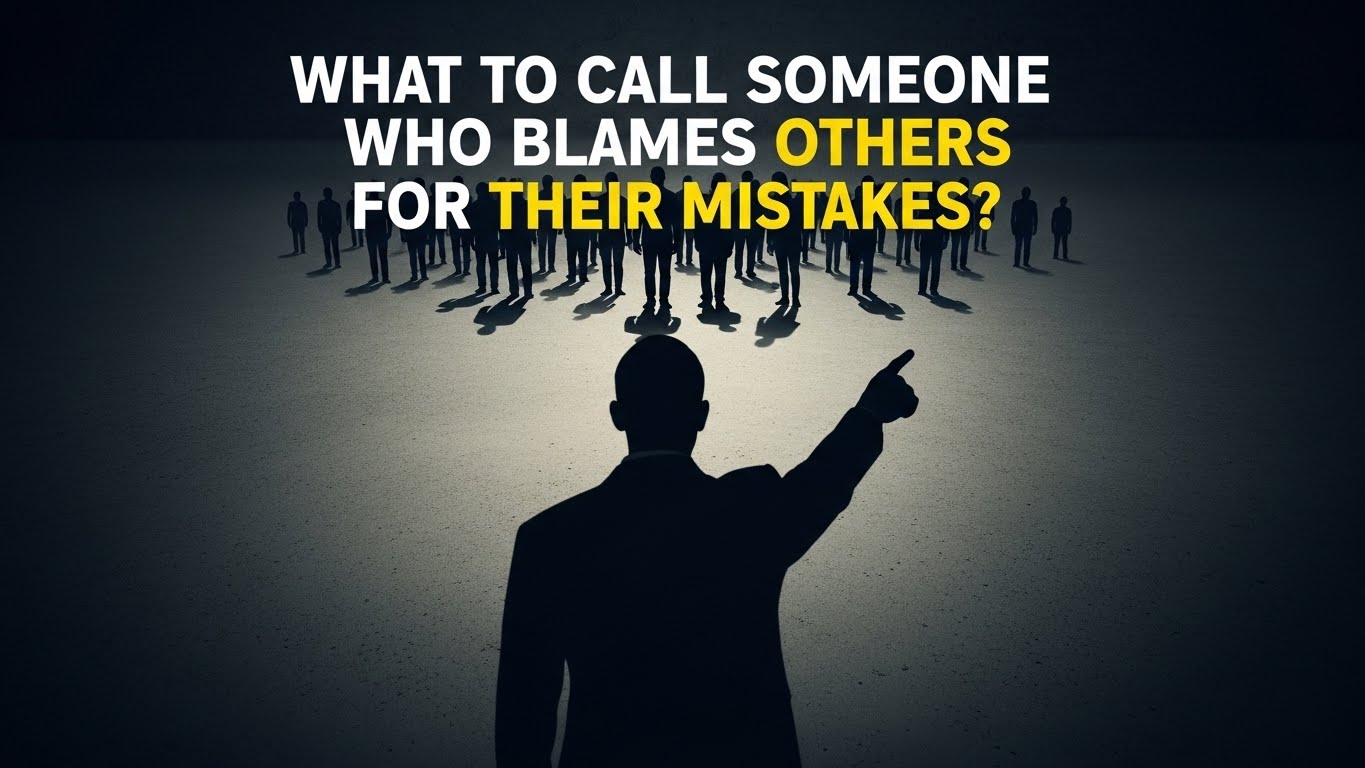
We have all encountered someone who refuses to take responsibility for their actions. Whether it is a colleague who points fingers when a project fails or a family member who finds fault in everyone but themselves, this behavior can be frustrating and damaging. This tendency to deflect responsibility is more than just a bad habit; it is a complex psychological pattern. Understanding what to call someone who blames others for their mistakes is the first step toward recognizing and addressing this toxic behavior.
This article will explore the various terms used to describe this conduct, from everyday language to clinical psychological concepts. We will delve into the underlying reasons for blame-shifting behavior, examine its impact on relationships, and provide strategies for dealing with individuals who consistently fail to take ownership of their errors.
Understanding Blame-Shifting Behavior

The act of blaming others is a defense mechanism. It is a way for an individual to protect their ego and self-esteem by redirecting fault away from themselves. While an occasional slip-up is human, a consistent pattern of this behavior indicates deeper accountability issues.
There isn’t a single, all-encompassing word for someone who always blames others, but several terms describe this trait and its related actions.
Common Terms and Phrases
In everyday conversation, you might hear several descriptive phrases:
- Blame-shifter: A straightforward term for someone who shifts blame.
- Finger-pointer: Evokes the literal act of pointing at someone else to assign fault.
- Scapegoater: Someone who singles out a person or group to bear the brunt of the blame for a problem, regardless of their actual responsibility.
- Deflector: This term highlights the person’s skill in redirecting any criticism or inquiry about their role in a negative outcome.
These labels effectively describe the action, but to truly understand the behavior, we need to look at the psychological concepts behind it.
The Psychology Behind Blaming Others

Why do some people develop a habit of blaming everyone else? The reasons are often rooted in psychology, serving as a shield against feelings of inadequacy, shame, or guilt. This is not just a simple choice but often an ingrained coping mechanism.
Psychological Projection
One of the most significant concepts related to blaming others is psychological projection. This is a defense mechanism where a person unconsciously attributes their own unacceptable thoughts, feelings, or motives to another person. For example, a person who is habitually dishonest may constantly accuse others of lying.
By projecting their own flaws onto someone else, they can deny that flaw in themselves. This protects their self-image. Someone engaging in psychological projection isn’t necessarily lying consciously; they may genuinely believe that the other person is the one at fault because their mind has externalized the negative trait to avoid internal conflict.
The Narcissistic Link
Chronic blame-shifting is a hallmark trait of Narcissistic Personality Disorder (NPD). Individuals with narcissistic traits have a fragile ego and an inflated sense of self-importance. Admitting a mistake would challenge their perception of perfection and superiority, which is an unbearable thought.
For a narcissist, accepting blame means accepting imperfection. To avoid this, they create a narrative where they are always the victim or the hero, and any failure is someone else’s fault. This isn’t just simple deflection; it is a core component of their personality structure. They often use gaslighting—a manipulation tactic that makes you question your own sanity—to reinforce their blame-shifting narrative.
Low Self-Esteem and Fear of Failure
Contrary to what one might think, blame-shifting behavior can also stem from low self-esteem. Individuals with a poor self-image may feel that admitting a mistake confirms their deepest fears about being incompetent or unworthy. Blaming others becomes a desperate attempt to preserve what little self-worth they have.
The fear of consequences also plays a huge role. This could be a fear of punishment, losing a job, damaging a relationship, or simply being judged by others. If someone learned in childhood that making mistakes led to severe criticism or punishment, they might develop blame-shifting as a survival strategy that carries into adulthood.
Scapegoating in Relationships and Groups
When blame-shifting extends to a group setting, it often results in scapegoating. This is the practice of singling out one person or group for unmerited blame and negative treatment. The term originates from an ancient ritual where a goat was symbolically laden with the sins of the community and cast into the wilderness.
Scapegoating in Families
In a dysfunctional family system, one member, often a child, may be designated as the scapegoat. This person becomes the focal point for the family’s problems.
- They are blamed for conflicts and tensions.
- Their achievements may be downplayed or ignored.
- They become the “problem child,” allowing other family members to avoid facing their own issues.
This form of scapegoating in relationships is incredibly damaging, leading to long-term psychological harm for the targeted individual, including anxiety, depression, and complex trauma.
Scapegoating in the Workplace
Workplace scapegoating creates a toxic environment. A manager might blame a specific employee for a team’s failure to protect their own reputation. Or, a team might single out a coworker to avoid collective responsibility. This behavior destroys trust, undermines morale, and hinders productivity. It prevents the team from learning from mistakes, as the true cause of the failure is never addressed.
The Impact of Living or Working with a Blame-Shifter
Dealing with someone who consistently blames others is emotionally and mentally draining. This toxic behavior can have serious consequences for your well-being and the health of your relationship with the person.
- Erosion of Trust: It’s impossible to trust someone who won’t take responsibility. You can’t rely on them to be honest or accountable.
- Emotional Exhaustion: Constantly defending yourself against unfair accusations is exhausting. You may find yourself walking on eggshells to avoid triggering a blame-filled outburst.
- Self-Doubt: Over time, especially if the person is a skilled manipulator, you might start to question yourself. You could begin to wonder if you are, in fact, the one at fault.
- Lack of Resolution: Problems can never be truly solved because the root cause is never acknowledged by the blame-shifter. The same issues will continue to arise.
Recognizing these impacts is crucial. Your feelings of frustration, confusion, and exhaustion are valid responses to this challenging dynamic.
How to Respond to Blame-Shifting Behavior

While you cannot change someone’s personality, you can change how you react to their behavior. Developing strategies to protect yourself is key to managing these interactions.
1. Do Not Engage in the Blame Game
When someone tries to shift blame onto you, your first instinct might be to defend yourself and argue. However, this often fuels the fire. A person committed to not taking responsibility will not be swayed by facts or logic.
- Stay Calm: Take a deep breath. Responding with anger or frustration will only escalate the situation.
- State Facts, Not Opinions: Instead of saying, “That’s not my fault,” try a factual approach. For example, “My part of the project was submitted on Tuesday as requested.” Keep it simple and direct.
- Refuse to Accept Undeserved Blame: You can calmly and firmly disagree. A simple, “I don’t agree with that assessment,” can be powerful. You do not need to provide a lengthy explanation.
2. Set and Maintain Boundaries
Boundaries are essential when dealing with toxic behavior. They define what you will and will not accept.
- Be Clear: Communicate your boundaries directly. For example, “I am not willing to be blamed for issues I did not cause. We need to focus on finding a solution.”
- Be Consistent: Enforce your boundaries every time. If you let them slide, the person will learn that your boundaries are not firm.
- Prepare for Pushback: A blame-shifter will likely resist your boundaries. They may become angry or try to guilt-trip you. Stand firm.
3. Focus on Solutions, Not Fault
Redirect the conversation away from blame and toward problem-solving. This shifts the dynamic from a personal attack to a collaborative effort.
- Use “We” Language: “How can we prevent this from happening next time?” or “What steps can we take to fix this?”
- Propose a Plan: Instead of dwelling on who did what, focus on the future. “Okay, this is where we are. Here’s what I suggest we do to move forward.”
4. Protect Your Emotional Well-being
Interacting with a chronic blame-shifter is taxing. Prioritize your mental health.
- Limit Contact: If possible, reduce your exposure to the person.
- Build a Support System: Talk to trusted friends, family, or a therapist about what you are experiencing. Getting an outside perspective can validate your feelings and help you see the situation more clearly.
- Practice Self-Compassion: Remind yourself that you are not responsible for another person’s inability to be accountable. Do not internalize their blame.
When to Seek Professional Help
If the blame-shifting behavior is part of a close relationship (a partner, parent, or close friend) and is causing significant distress, it may be time to seek professional help. A therapist can provide tools for communication and coping. If you are the one in the relationship with the blame-shifter, individual therapy can help you build resilience and decide how to proceed.
For the person who blames others, therapy can help them uncover the root causes of their behavior, such as underlying insecurities, past trauma, or narcissistic traits. However, they must be willing to acknowledge they have a problem, which is often the biggest hurdle for someone with accountability issues.
Conclusion: Moving Beyond Blame
There are many ways to describe someone who blames others for their mistakes, from the simple “finger-pointer” to the more clinical “narcissist.” These terms—including blame-shifting behavior, psychological projection, and scapegoating—help us label and understand this difficult pattern.
Ultimately, the label is less important than recognizing the toxic impact of the behavior. By understanding the psychology behind it and equipping yourself with strategies to respond effectively, you can protect your emotional well-being and refuse to participate in the cycle of blame. Shifting the focus from fault to solutions creates a healthier and more productive path forward for everyone involved. Accountability is a cornerstone of maturity and healthy relationships, and while you cannot force it upon others, you can model it in your own actions and demand it in your interactions.