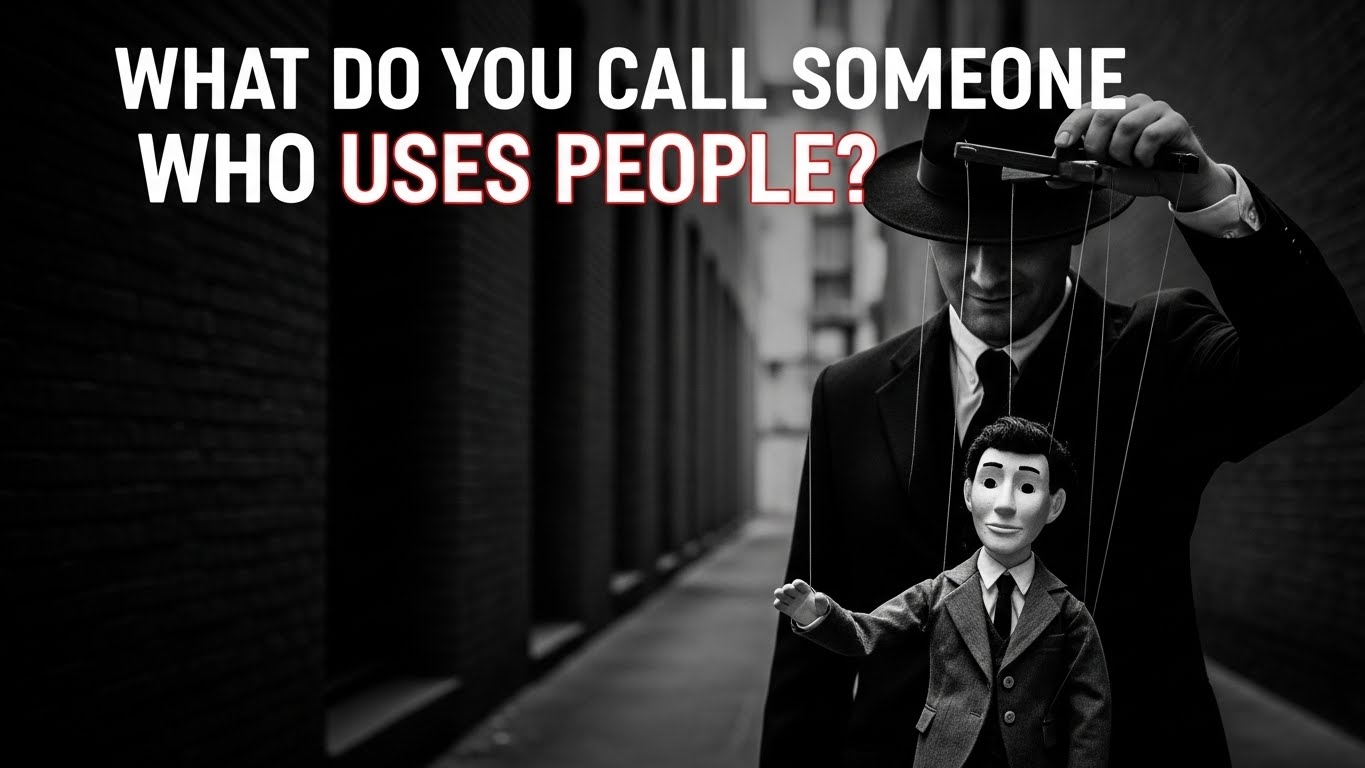
What Do You Call Someone Who Uses People?
We have all encountered them. Individuals who seem to glide through life, leaving a trail of confusion and hurt feelings in their wake. They have a knack for getting what they want, often at the expense of others. When you reflect on your interactions with them, you might feel drained, used, or emotionally exhausted. This leads to a critical question: what do you call someone who uses people?
The language we use to describe this behavior is rich and varied, spanning from everyday slang to precise psychological terms. Understanding these labels is the first step toward identifying and protecting yourself from exploitation in relationships. This article explores the different names for people who use others, delves into the psychological traits behind their actions, and offers insights on how to recognize the signs of a user.
The Spectrum of Exploitative Behavior

Calling someone a “user” is a broad but accurate starting point. It captures the essence of a one-sided relationship where one person consistently takes more than they give. However, to truly understand the dynamic, we need to explore more specific terms that highlight different facets of manipulative behavior.
The Manipulator
A manipulator is a master of influence and control. They skillfully steer conversations, situations, and people to serve their own agenda. Their tactics are often subtle, making them difficult to detect until after the fact.
Common traits of a manipulator:
- Gaslighting: They make you question your own sanity, memory, or perception of reality. Phrases like, “You’re being too sensitive,” or “I never said that,” are common tools.
- Guilt-tripping: Manipulators play the victim to make you feel responsible for their happiness or well-being, pressuring you into doing things you otherwise wouldn’t.
- Playing on Insecurities: They identify your vulnerabilities and use them against you to maintain control or get what they want.
Manipulative behavior is a hallmark of someone who uses people, as it allows them to maintain an upper hand without resorting to overt aggression.
The Opportunist
An opportunist sees every person and situation as a potential resource to be exploited for personal gain. They are often charming and friendly, but their interest in you is directly tied to what you can offer them—be it social status, financial help, or professional connections.
The key characteristic of an opportunist is their transactional approach to relationships. They are present and attentive when they need something but may disappear once their goal is achieved. Their loyalty is fleeting and conditional, making them unreliable friends, partners, or colleagues. They excel at “networking” but often fail at building genuine, lasting connections.
The Social Climber
Closely related to the opportunist is the social climber. This person is singularly focused on ascending the social or professional ladder. They form relationships based on a person’s perceived status or influence. They may befriend someone to get an introduction to a more powerful individual, only to discard the original connection once it no longer serves a purpose.
Social climbers are adept at flattery and can appear incredibly supportive, but their actions are always calculated. They measure the value of their relationships not by emotional connection but by the social capital they can gain.
Psychological Traits of Manipulators and Users

While terms like “manipulator” and “opportunist” describe behaviors, psychology offers deeper insights into the personality structures that drive them. Certain psychological traits and even personality disorders are strongly associated with the tendency to use others.
Narcissistic Personality Traits
Narcissism exists on a spectrum. While many people have some narcissistic traits, those who consistently use others often exhibit them to a higher degree. Individuals with pronounced narcissistic tendencies possess an inflated sense of self-importance, a deep need for excessive admiration, and a striking lack of empathy.
Signs of a narcissist who uses people:
- Lack of Empathy: They are unable or unwilling to understand or share the feelings of others. This allows them to exploit people without remorse.
- Sense of Entitlement: They believe they deserve special treatment and have a right to get what they want, regardless of how it affects others.
- Exploitative Nature: They view people as objects to be used for their gratification or to advance their goals. Relationships are a means to an end.
When you are in a relationship with a narcissist, you often feel like an accessory or a tool rather than a partner. Your needs and feelings are secondary to theirs.
Machiavellianism
Named after the political philosopher Niccolò Machiavelli, this personality trait is characterized by a cynical, pragmatic, and emotionally detached approach to life. People high in Machiavellianism believe that the ends justify the means. They are strategic, calculating, and excel at manipulation to achieve their goals.
Unlike narcissists, who may be driven by a fragile ego, Machiavellians are often more cold and calculating. They use flattery, deceit, and manipulation as practical tools for success. Exploitation in relationships is not a byproduct of their personality—it is a core strategy.
The Dark Triad
In psychology, the “Dark Triad” refers to a combination of three distinct but related personality traits: narcissism, Machiavellianism, and psychopathy. Individuals who score high on all three are particularly prone to using and harming others.
- Narcissism: The grandiosity and entitlement.
- Machiavellianism: The strategic manipulation.
- Psychopathy: The impulsivity, thrill-seeking, and severe lack of empathy and remorse.
Someone embodying the Dark Triad is a formidable user of people. They combine the ego of a narcissist, the cunning of a Machiavellian, and the callousness of a psychopath, making them highly effective at exploitation and often dangerous to be around.
Recognizing the Signs of a User
Identifying someone who uses people can be difficult, as they are often skilled at hiding their true intentions. However, there are several red flags to watch for. Paying attention to these signs of a user can help you protect your emotional and mental well-being.
It’s Always About Them
A primary sign of a user is that conversations and plans consistently revolve around their needs, wants, and problems. They may feign interest in your life, but the focus quickly shifts back to them. If you share a problem, they might one-up you with a bigger problem of their own. If you share good news, they might diminish it or pivot to their own accomplishments.
An Imbalance of Giving and Taking
Healthy relationships involve a reciprocal exchange of support, time, and energy. With a user, this balance is skewed. They are always in need of a favor, a loan, an ear to listen, or a shoulder to cry on. However, when you are the one in need, they are suddenly busy, unavailable, or dismissive. This one-way flow of resources is a clear sign of exploitation.
Charm That Turns On and Off
Users are often masters of charm. They can be incredibly charismatic, attentive, and complimentary when they want something from you. This is a tactic known as “love bombing.” Once they have secured what they need, the charm may vanish, replaced by indifference or criticism. This on-and-off behavior can be confusing and emotionally draining, leaving you constantly seeking their approval.
They Don’t Respect Your Boundaries
A person who intends to use you will consistently test and push your boundaries. They might ask for favors that make you uncomfortable, pry into your personal life, or pressure you into decisions you’re not ready to make. When you try to enforce a boundary, they may react with anger, guilt-tripping, or play the victim, making you feel unreasonable for saying no.
Protecting Yourself from Exploitation

Recognizing that you are dealing with someone who uses people is the first, and most important, step. The next is to take action to protect yourself.
- Trust Your Gut: Often, our intuition sends us warning signals long before our logical brain catches up. If a relationship feels consistently draining or one-sided, pay attention to that feeling.
- Set and Enforce Firm Boundaries: Decide what you are and are not willing to do for someone. Communicate these boundaries clearly and calmly. If the person pushes back, stand firm. A person who respects you will respect your limits; a user will not.
- Observe Actions, Not Words: Users are often gifted with words. They make promises they never intend to keep and offer apologies that lack sincerity. Pay close attention to their behavior over time. Do their actions align with their words? A consistent pattern of selfish behavior is more telling than any charming excuse.
- Limit or End Contact: In cases of severe exploitation, especially with individuals exhibiting strong narcissistic or Dark Triad traits, the safest course of action may be to limit or completely end contact. This can be difficult, but it is often necessary for your long-term well-being.
Ultimately, what you call someone who uses people—be it a manipulator, an opportunist, or a narcissist—is less important than recognizing their impact on your life. By understanding the terminology, identifying the psychological traits, and spotting the behavioral signs, you can empower yourself to build healthier, more reciprocal relationships.
